

Artificial Intelligence (AI) and Machine Learning (ML) are no longer future goals for life sciences—they’re current necessities. In this session, PTP joined John Conway, Chief Visioneer Officer of 20/15 Visioneers, to discuss the practical realities of implementing AI in research environments. Titled “The Rational AI Architect,” this webinar explores how biotech companies and research teams can lay the groundwork for successful AI projects.
The AI “Gold Rush” in Life Sciences
In 2023 and 2024, nearly every technology roadmap has been updated to include generative AI, LLMs, or predictive modeling. But for life sciences companies—especially those still modernizing infrastructure—AI can be more aspiration than reality. Cloud data migration and governance must come first, and the foundation must be secure, scalable, and compliant with life sciences standards like GxP and HIPAA.
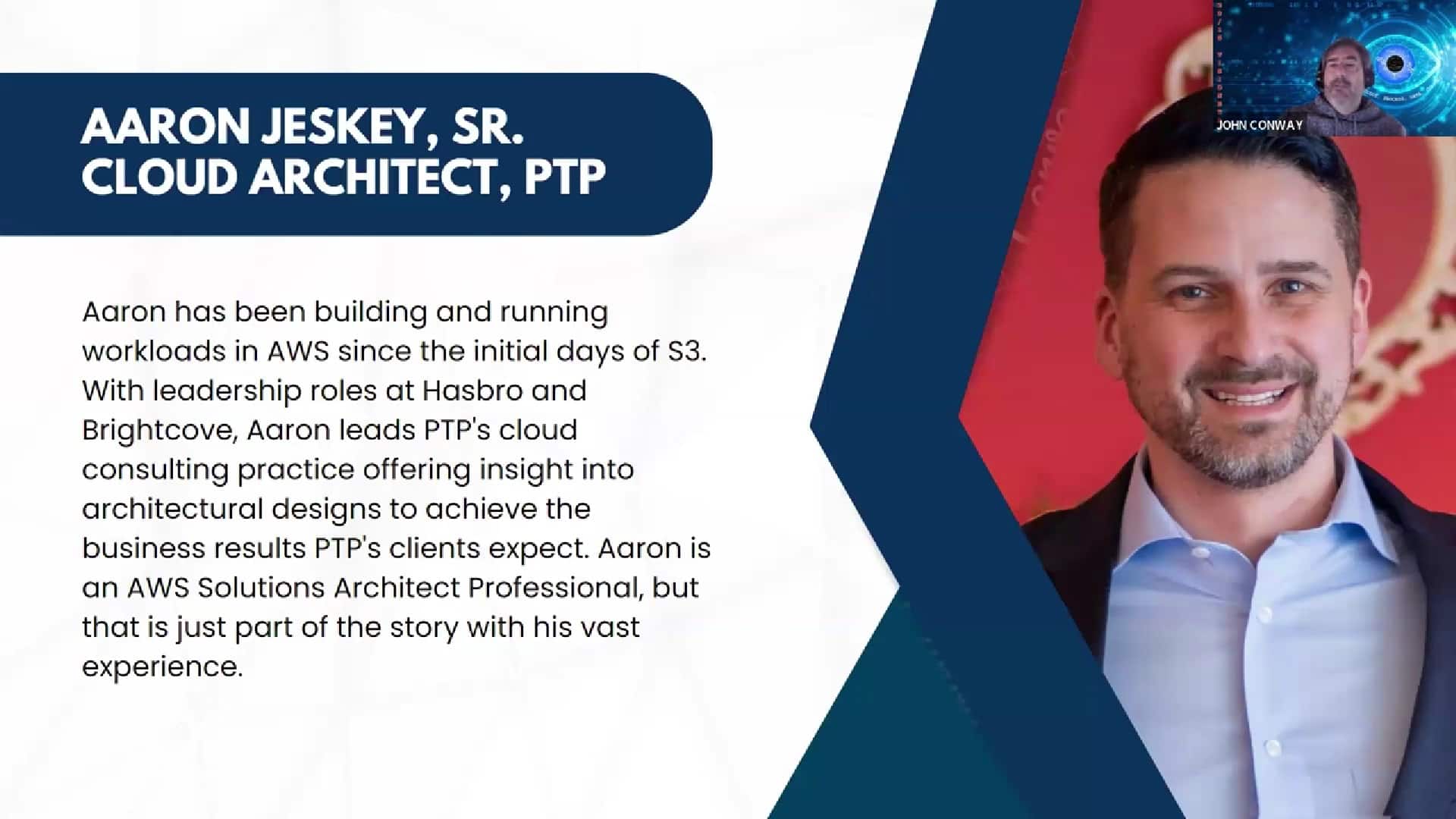
PTP’s team has helped companies design for long-term success by aligning IT infrastructure for AI workloads, assessing readiness, and educating internal teams. This blog summarizes key takeaways from the conversation with John Conway and Aaron Jeskey, Senior Cloud Architect at PTP.
Where AI Initiatives Begin—and Why It Matters
AI and ML requests in life sciences organizations typically originate in one of two ways:
Bottom-Up: From Researchers to Leadership
Requests often come from bench scientists, data analysts, or bioinformaticians who see the potential of AI in their workflows. While technically promising, these initiatives struggle without organizational support. Challenges include:
-
Lack of platform consistency
-
Poorly defined processes for infrastructure management
-
Limited buy-in from senior leadership
-
Fragmented tools and shadow IT
To scale successfully, research IT teams need alignment from leadership on governance, security, and funding.
 Top-Down: From Leadership to Technical Teams
When executives lead the charge for AI, expectations tend to be high—but often misaligned with technical feasibility. Challenges include:
-
A shortage of qualified cloud data engineers or DevOps resources
-
Unrealistic timelines
-
Missing foundational components (e.g., data orchestration, monitoring, tagging strategies)
-
Security and compliance blind spots
Without sufficient technical resources or internal education, the disconnect between strategy and execution grows quickly.
Managing Expectations and Building Real Platforms
Whether AI demand comes from the C-suite or the lab, the risks are similar: misalignment, wasted investment, and failed pilots. To mitigate this, PTP recommends:
-
Starting with a Well-Architected Framework Review to benchmark infrastructure readiness
-
Implementing cloud governance and cost control early
-
Leveraging scalable platforms like AWS for Life Sciences to support evolving workloads
-
Building internal fluency through education and transparent reporting
In one PTP case study, a genomics company attempted to implement ML without a centralized data repository. After a platform redesign and cloud engineering support, they reduced duplication, improved compliance, and accelerated model training by 30%.
Conclusion: Rational AI Starts with Realistic Infrastructure
Whether requests come top-down or bottom-up, life sciences companies need a unified strategy for implementing AI. That means prioritizing foundational architecture, building in compliance from day one, and maintaining strong communication between research and leadership.
PTP helps clients develop cloud-native AI platforms that are secure, scalable, and optimized for scientific research. From managed IT for labs to multi-region HPC clusters, we help life sciences companies move from AI talk to AI outcomes.

Download our white paper on Scientific Data Management: Best Practices to Achieve R&D Operational Excellence